

Unwind at Ridge Retreat with ethical adventures. Private...
Read MoreSustainable Vs Responsible Tourism
Ethical Travel Guide: What is the difference between sustainable and responsible tourism?
Travel is one of the best things we can experience in life; it opens our understanding of the world, different cultures, food and landscapes. But, there is so much pressure on society to reduce our carbon footprint and care about sustainable and responsible tourism. Often, sustainable tourism and responsible tourism are used interchangeably and it can leave travellers wondering, is there even a difference?
The main difference between sustainable and responsible tourism is accountability. The sustainable tourism industry holds organisations accountable to reduce their impact on the environment. Whereas responsible tourism puts the responsibility onto both companies and individuals to learn and reduce their impact on both the environment and communities they visit.
There is so much more to both sustainable and responsible tourism and its long-term goals. However, we at ethical adventures believe that if every individual can understand the negative impacts of tourism, we can build a community of travellers who care and make positive contributions to protect the industry for future generations. In this article, we will cover:
- What is sustainable tourism
- What are some examples of sustainable tourism
- What is responsible tourism
- What are some examples of responsible tourism
- What is the difference between sustainable and responsible tourism
- Responsible tourism from the travel industry’s perspective
- Travel tips for an Ethical Tourist
What Is Sustainable Tourism?
Sustainable tourism was born from the more general term of “sustainable development” which was published in the 1970’s Brundtland Commission report called “Our Common Future“. Sustainable development was coined as:
“development that meets the needs of the present without compromising the ability of future generations to meet their own needs.”
Applying this to the sustainable tourism industry, there is a requirement for companies and organisations to implement sustainable practices which will reduce negative impacts on the environment, communities and local economies. With the onus on companies to be transparent about their practices in the present day, we can build a future of travel that is sustainable for generations to come.
Just as with any industry, sustainable tourism is regulated by local and international bodies who work hard to provide guidelines, change regulations and impose requirements on companies operating in tourism destinations. The GSTC criteria is a Global Standard used to educate, inform policy-makers in countries and certify sustainable travel companies.
What Are Some Examples Of Sustainable Tourism?
As sustainable tourism refers to the environmental, community and economic impacts, there are many different types of sustainable practices focusing on each element. Sustainable tourism can include:
- Ecotourism: This type of tourism involves visiting natural areas while ensuring minimal impact on the environment. It promotes conservation, sustainable use, and community involvement and travel companies can become a member of the Ecotourism Australia community.
- Cultural tourism: Cultural tourism involves visiting sites of historical, cultural, or religious significance while promoting the preservation of the cultural heritage. It also involves supporting local communities through the promotion of their traditional practices.
- Community-based tourism: This type of tourism involves working with local communities to develop tourism activities that benefit them economically while preserving their way of life and culture.
- Sustainable accommodation: Hotels, lodges, and other accommodation facilities that have been designed with sustainability in mind can help to reduce their carbon footprint and promote environmental protection.
- Responsible wildlife tourism: Wildlife tourism that is conducted in a responsible and ethical manner can help to conserve wildlife and their habitats while supporting local communities.
- Sustainable transportation: Using public transport, cycling, or walking instead of driving can help to reduce the carbon footprint of tourism.
- Volunteer tourism: Volunteer tourism involves participating in activities that benefit local communities and the environment, such as conservation work, teaching, or community development.
What Is Responsible Tourism?
Whereas sustainable tourism puts the responsibility on the industry to follow practices for a sustainable future of travel; responsible tourism puts the onus on individuals. It can be defined as any form of responsible tourism in the industry that seeks to minimise negative impacts on social, economic and environmental resources and instead generates greater economic benefits for the local communities and people.
It is not just the duty of the Government, it requires tour operators, tourists and community hosts to take responsibility for their individual impact on the destinations they visit and make choices that will reduce any negative impacts.
This can include supporting local businesses and communities that look to reduce mass tourism so they can provide more personable, ethical and meaningful experiences for both the tourists and the local community. It can involve supporting both attractions and cultural centres, using environmentally sustainable practices, respecting and protecting natural areas, promoting cultural heritage and educating tourists on responsible behaviour.
Ultimately, to promote responsible tourism is to treat any place you visit with as much respect, thought and care as you would want people to have for your home, local area and family. Building a worldwide community of responsible travellers can lead to a more sustainable tourism industry, meaningful connections and provide socio-economic benefits to local cultures.
What Are Some Examples Of Responsible Tourism?
Responsible tourism encompasses a wide range of practices and activities that aim to minimise the negative impacts of tourism while maximising the benefits for local communities and the environment. Here are some examples of responsible tourism:
- Supporting locally-owned and operated businesses that prioritise sustainable practices, such as eco-friendly accommodation, locally-sourced food, and transportation that reduces carbon footprint.
- Engaging in activities that are respectful of local culture and traditions, namely attending cultural festivals, visiting historical sites and landmarks, and participating in local workshops and activities.
- Reducing waste and promoting sustainable practices, such as recycling, reducing plastic use, and conserving water and energy.
- Respecting natural habitats and wildlife, like visiting national parks and wildlife sanctuaries, engaging in responsible wildlife watching, and supporting conservation efforts.
- Participating in community-based tourism, including home or farm stays, village tours, and volunteering with local organisations.
- Choosing responsible tour operators and travel agencies that prioritise sustainable and ethical practices and support local communities.
- Educating oneself on local customs and traditions, environmental issues, and social and economic challenges facing the community being visited.
By engaging in these responsible tourism practices, travellers can help minimise negative impacts and contribute to sustainable and positive outcomes for the environment, local communities, and the tourism industry as a whole.
What Is The Difference Between Sustainable And Responsible Tourism?
The main difference between sustainable and responsible tourism is the accountability of the practices. Whilst both aim to ensure the tourism industry is protected for future generations, they each have unique impacts. Sustainable tourism aims to increase awareness, change international policies and asks companies to take responsibility of their sustainable impact. Responsible tourism asks every single individual to reduce their negative impact on the natural environment and traditional cultures and instead try to have a positive impact on the local economic resources.
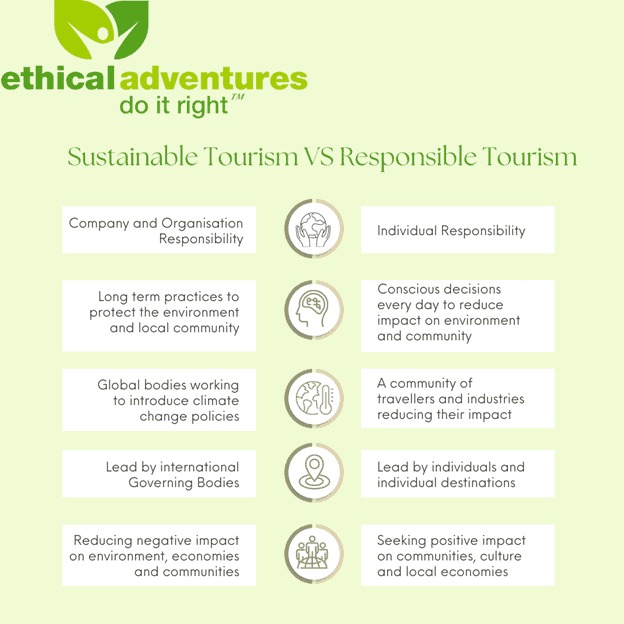
Whilst it is not always possible to completely reduce your carbon footprint when travelling via plane, there are ways to make conscious decisions to lessen the impact. Tourism can never be truly sustainable as we need to use resources, but the aim of responsible tourism is important to build a community of like-minded individuals who care and positive impacts.
Responsible Tourism From The Travel Industry’s Perspective
From the travel industry’s perspective, responsible tourism is about operators, guides, communities, local businesses and visitors all coming together under the same values. Instead of just ticking boxes and complying to international policies, responsible tourism builds a greater understanding of community, economic and environmental impacts which is turn makes the industry sustainable for longer.
One of the main ways that the travel industry can promote responsible tourism is by implementing sustainable practices in their operations. This includes reducing energy consumption, waste generation, and greenhouse gas emissions, as well as promoting environmentally-friendly practices among their customers. This can be done through measures such as using renewable energy sources, reducing water consumption, promoting recycling, and reducing single-use plastics.
Another important aspect of responsible tourism from the travel industry’s perspective is to promote community-based tourism. This involves working with local communities to develop tourism products that are sustainable and culturally sensitive, while also providing economic benefits to the local community. By working closely with local communities, the travel industry can help to preserve traditional cultures and customs while providing unique and authentic experiences for tourists.
In addition to these measures, the travel industry can also promote responsible tourism by educating travellers about sustainable practices and encouraging them to make responsible choices during their travels. Providing enjoyable experiences that involve local communities to bring more meaningful connections not only increases the value of the travel service product, it builds local pride in the area.
Overall, responsible tourism from the travel industry’s perspective involves a range of measures that seek to promote sustainable practices throughout the entire tourism value chain. By working closely with local communities and promoting sustainable practices, the travel industry can help to create a more sustainable and responsible tourism industry for the future.
Travel Tips For An Ethical Tourist
As an ethical tourist, there are many things you can do to ensure that your travels have a positive impact on the environment, local communities, and cultures. Here are some travel tips for an ethical tourist:
- Research your destination: Before traveling to a new destination, do some research to learn about the local culture, customs, and traditions. This can help you to avoid inadvertently offending local people or contributing to cultural misunderstandings.
- Choose responsible accommodation: Look for accommodation options that prioritize sustainable practices, such as using renewable energy, reducing waste, and supporting local communities. You can also choose to stay in locally-owned and operated accommodation to support the local economy.
- Reduce your environmental impact: Be mindful of your environmental impact when traveling by reducing your energy consumption, avoiding single-use plastics, and supporting eco-friendly tourism activities such as hiking, cycling, or wildlife watching.
- Respect local cultures and customs: Be respectful of local cultures and customs by dressing appropriately, learning a few words in the local language, and avoiding activities that exploit animals or people.
- Support local businesses: Support local businesses by buying locally-made products and eating at locally-owned restaurants. This helps to support the local economy and promote sustainable tourism practices.
- Choose ethical tours and activities: Look for tours and activities that prioritize responsible and sustainable practices, such as wildlife conservation, cultural immersion, and eco-friendly tourism.
- Give back to local communities: Consider volunteering your time or donating to local charities and non-profits that support community development, environmental conservation, or cultural preservation.
By following these travel tips, you can help to promote responsible and ethical tourism practices that benefit the environment, local communities, and cultures.
Frequently Asked Questions
1. How Do I Know Which Tour Operators Are Responsible?
Tour operators are responsible in a number of ways and always seek to reduce mass tourism by:
- Offering small or private tours
- Providing experiences with local people, cultures and businesses
- Promoting sustainable practices and seeking to reduce their carbon footprint
- Educating their guests on the environmental and cultural issues
- Promoting economic value in the destinations they visit
- Getting involved in local groups and legislation to ensure the land is protected
- Seeking to offer products that are meaningful rather than easy profit
2. How Can I Connect With Local Communities In The Northern Territory?
There are many opportunities to connect with Indigenous communities and local people in the Top End. With a cultural history dating back 65,000 years, it would be a shame to visit this beautiful state without connecting with the local community.
ethical adventures provide many day tours and multi-day tours that always provide meaningful experiences with the culture, local businesses and Aboriginal owned community centres. We aim to build a community of responsible travellers who carry these values to every destination they visit, making the industry more enjoyable and sustainable for longer.
Related Articles

Guluyambi Culture Cruise – East Alligator River
Discover Kakadu through Bininj eyes on the Guluyambi...
Read More
Yellow Waters Cruise, Kakadu National Park
Discover scenic flights in Kakadu with Ethical Adventures....
Read More