Sedimentation: The formation of Nourlangie Rock began with the deposition of sediments, including sand and minerals, in an ancient environment. This sedimentation process occurred over a vast period, during which layers of sediment accumulated and compressed.
Compaction and Cementation: Over time, the weight of the accumulating sediments led to compaction, a process in which the sediments were pressed together, reducing pore spaces between them. This compaction, combined with the presence of minerals, facilitated cementation, where minerals acted as a natural glue, binding the sediments into solid rock.
Tectonic Activity: The Kakadu region has been influenced by tectonic forces, including uplifting and folding, which contributed to the elevation of the sedimentary rocks. Tectonic activity played a role in shaping the overall landscape and topography of the area.
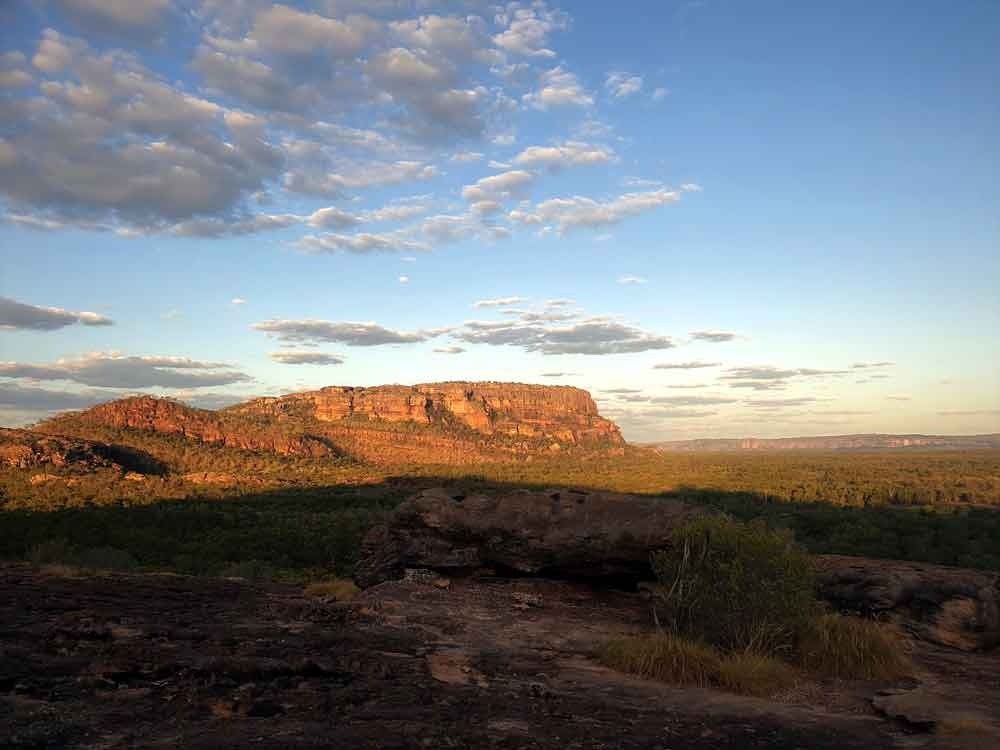
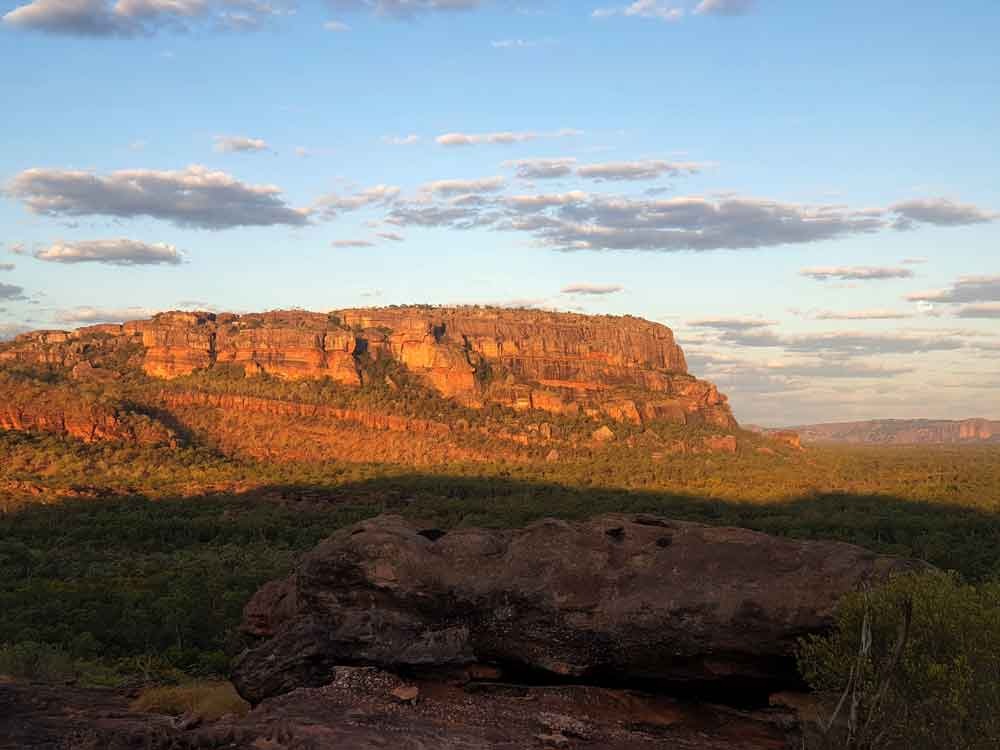
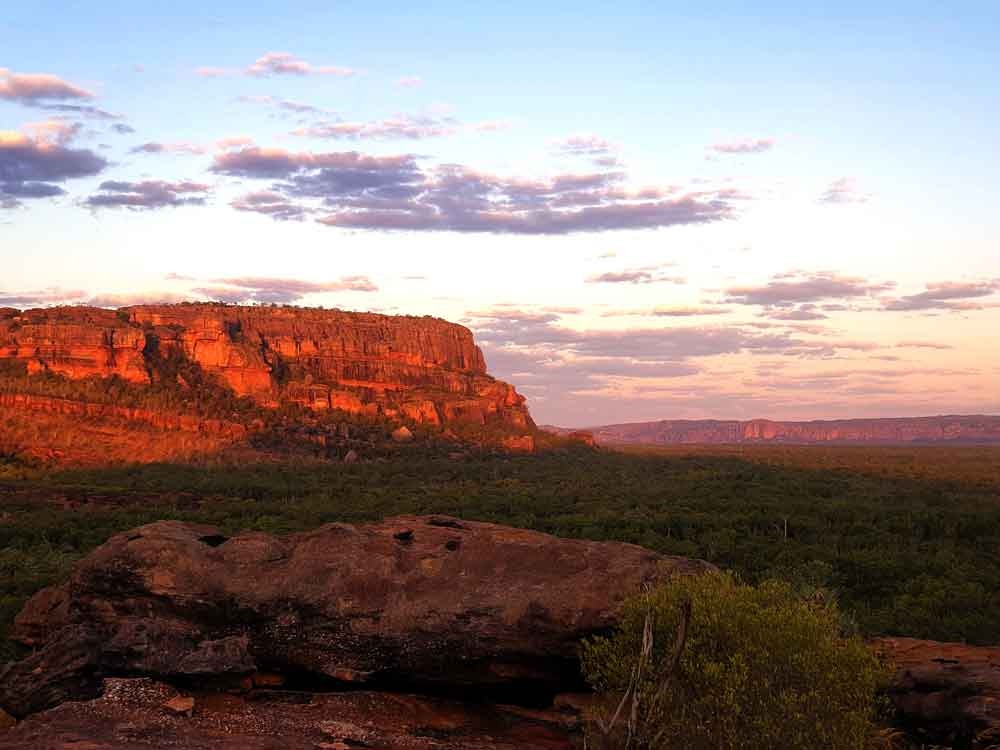
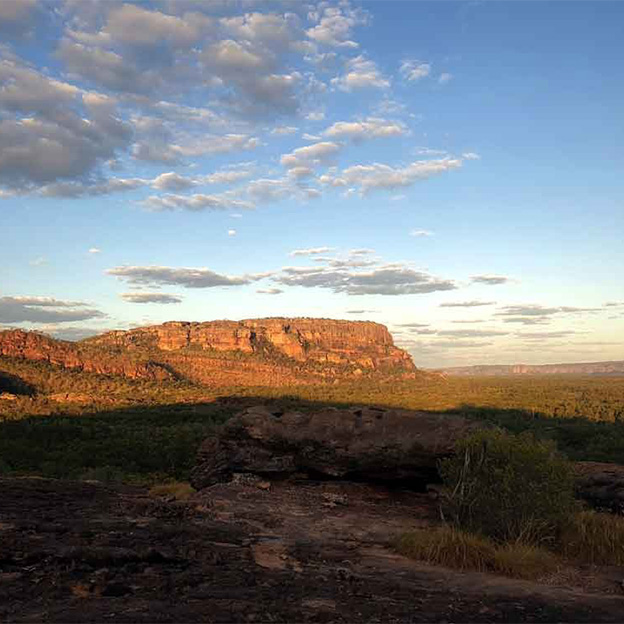
Erosion: Wind and water erosion, over millions of years, played a crucial role in shaping the distinctive features of Nourlangie Rock. The abrasive action of wind-borne sand and water gradually wore away the softer layers of rock, creating the towering cliffs, rugged escarpments, and intricate surface textures that characterize the rock today.
Mineral Composition: The rich red and ochre hues of Nourlangie Rock are a result of its mineral composition, particularly the presence of iron oxides. These minerals not only contribute to the coloration but also provide insights into the environmental conditions and chemical processes that occurred during the rock’s formation.
Cultural Impact: Beyond geological processes, Nourlangie Rock bears cultural significance. Indigenous peoples, particularly the Bininj people, have inhabited the region for thousands of years, leaving a cultural imprint through rock art that adds an additional layer to the rock’s history.