Nourlangie | Burrungkuy
An ancient outlier
Nourlangie Rock (Burrunguy) – Ancient Rock Art in Kakadu National Park
A place where stories live in stone
There are places you visit.
And there are places that stay with you.
Nourlangie Rock is one of those places.
Also known by its traditional name, Burrunguy, this ancient sandstone escarpment sits quietly within Kakadu National Park. For tens of thousands of years, it has been a place of shelter, art, ceremony, and learning.
Today, Nourlangie Rock still holds those stories. You just need to arrive gently enough to hear them.
What is Nourlangie Rock?
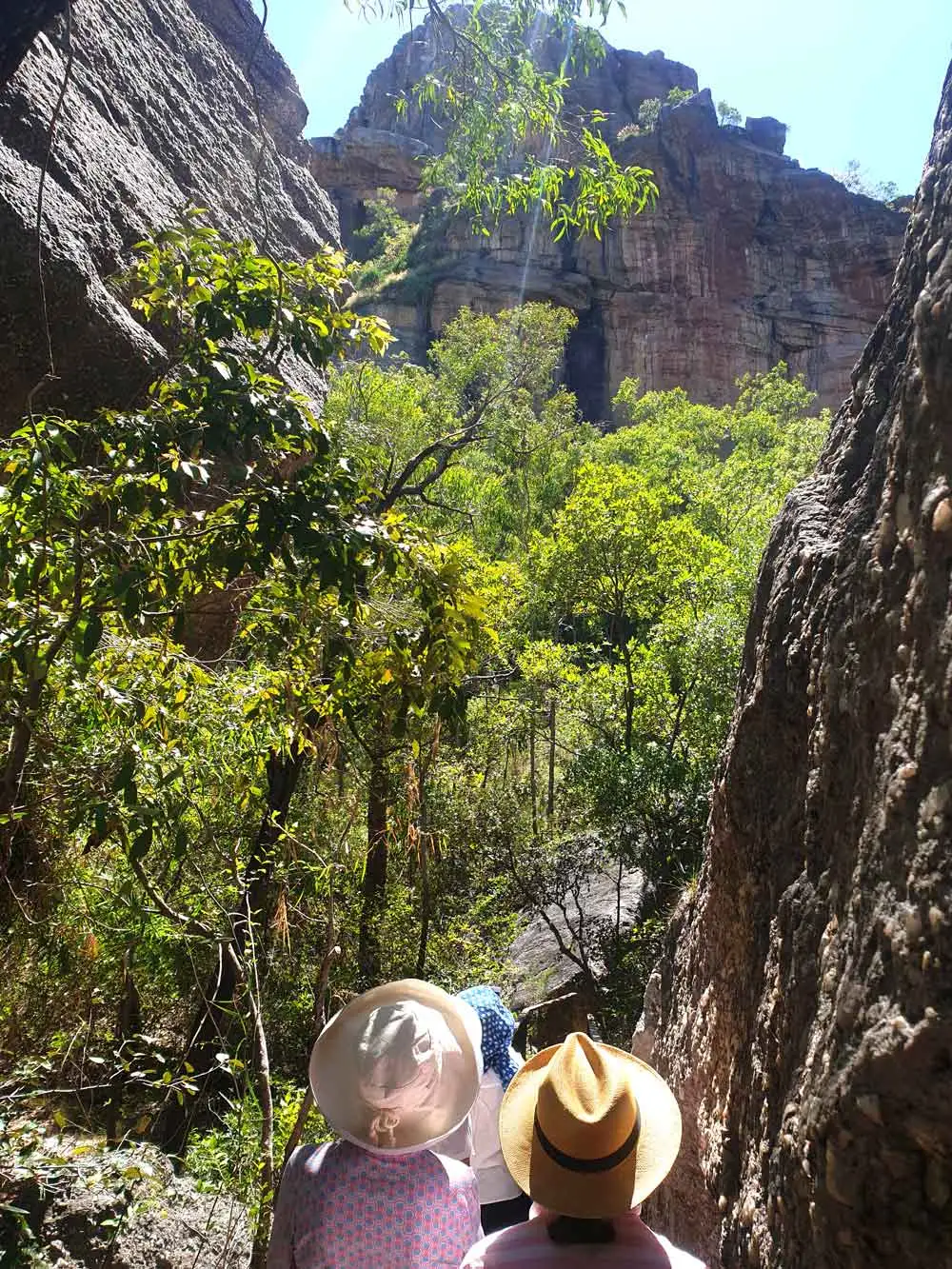
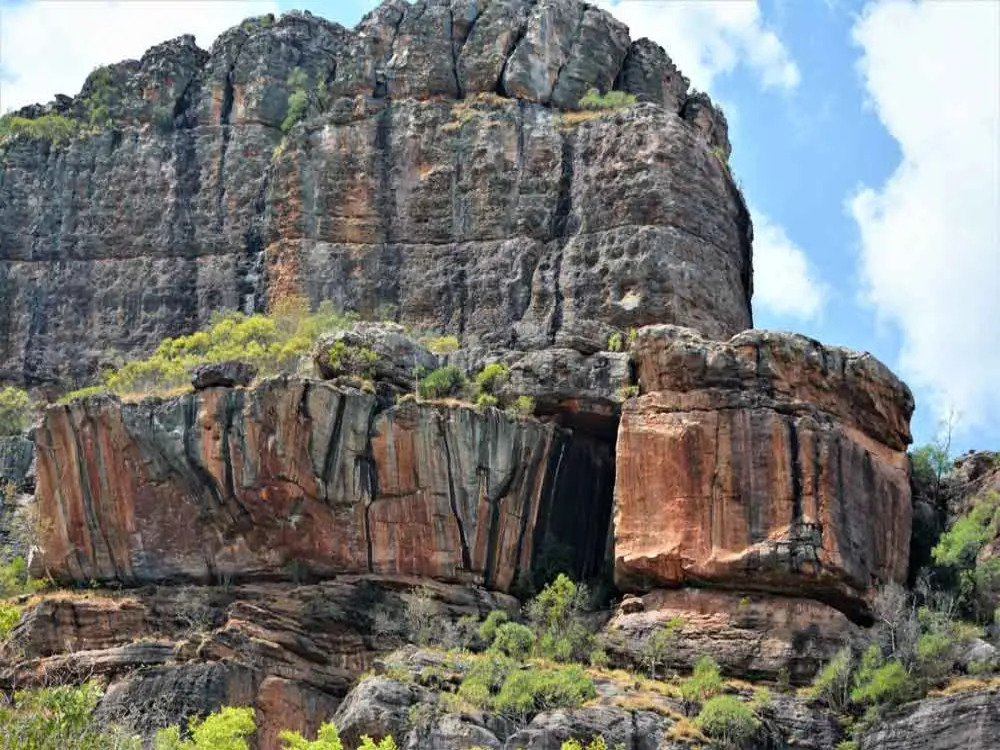
Nourlangie Rock is a large sandstone outcrop in the southern part of Kakadu.
It rises from the floodplains and forms part of the Arnhem Land escarpment. Along its base are shaded rock shelters, walking tracks, and some of the most well-known Aboriginal rock art sites in Australia.
Many people come here because Nourlangie Rock is easy to access and suitable for most visitors.
However, what makes it truly special is not convenience.
It is the deep sense of time, presence, and connection you feel when you slow down.
Formation and influences of the Nourlangie Rock Region:
Sedimentation
The formation of Nourlangie Rock began with the deposition of sediments, including sand and minerals, in an ancient environment. This sedimentation process occurred over a vast period, during which layers of sediment accumulated and compressed.
Compaction and Cementation
Over time, the weight of the accumulating sediments led to compaction, a process in which the sediments were pressed together, reducing pore spaces between them. This compaction, combined with the presence of minerals, facilitated cementation, where minerals acted as a natural glue, binding the sediments into solid rock.
Tectonic Activity
The Kakadu region has been influenced by tectonic forces, including uplifting and folding, which contributed to the elevation of the sedimentary rocks. Tectonic activity played a role in shaping the overall landscape and topography of the area.
Erosion
Wind and water erosion, over millions of years, played a crucial role in shaping the distinctive features of Nourlangie Rock. The abrasive action of wind-borne sand and water gradually wore away the softer layers of rock, creating the towering cliffs, rugged escarpments, and intricate surface textures that characterise the rock today.
Mineral Composition
The rich red and ochre hues of Nourlangie Rock are a result of its mineral composition, particularly the presence of iron oxides. These minerals not only contribute to the coloration but also provide insights into the environmental conditions and chemical processes that occurred during the rock’s formation.
Cultural Impact
Beyond geological processes, Nourlangie Rock bears cultural significance. Indigenous peoples, particularly the Bininj people, have inhabited the region for thousands of years, leaving a cultural imprint through rock art that adds an additional layer to the rock’s history.
Where is Nourlangie ?
Nourlangie Rock is located in the southern area of Kakadu National Park.
It is approximately:
90 minutes from Jabiru
3.5 hours from Darwin
The road is sealed, and access is usually straightforward. However, conditions can change during the Wet Season.
Burrunguy – the traditional name of Nourlangie Rock
Burrunguy is the traditional name for Nourlangie Rock.
This name comes from the language of the Bininj/Mungguy people, the Traditional Owners of this land. It reflects a connection that has never been broken.
While Nourlangie Rock is widely used today, especially in tourism, both names are often spoken together. Using Nourlangie Rock (Burrunguy) helps honour culture while guiding visitors respectfully.
Names matter. They remind us that this place has always been known, cared for, and remembered.
Aboriginal rock art at Nourlangie (Burrunguy)
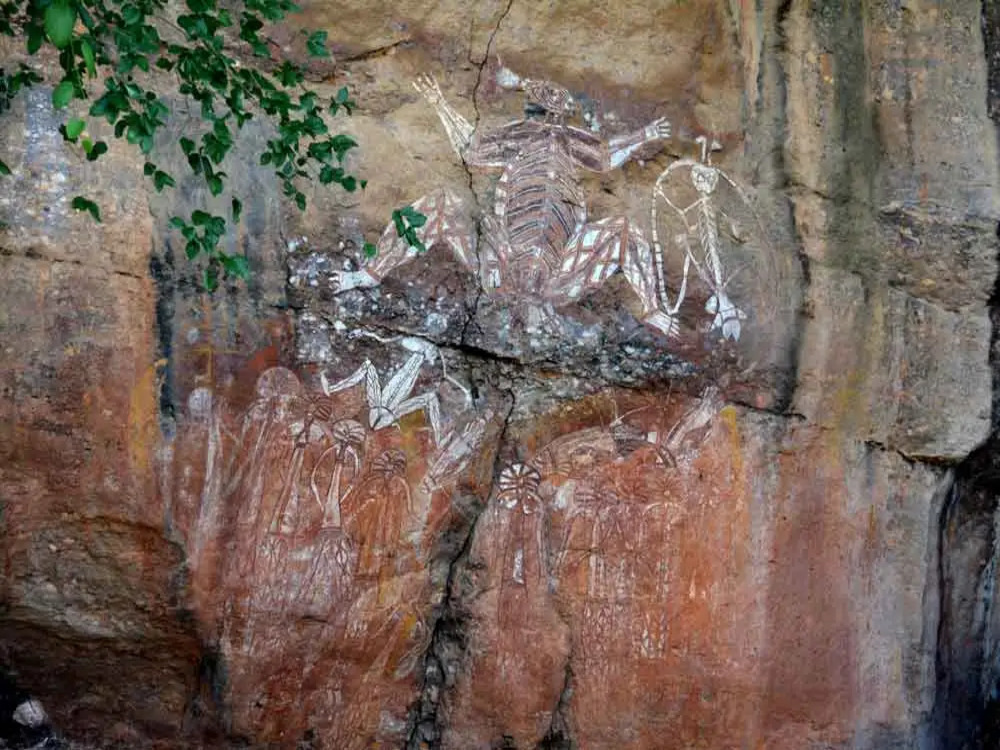
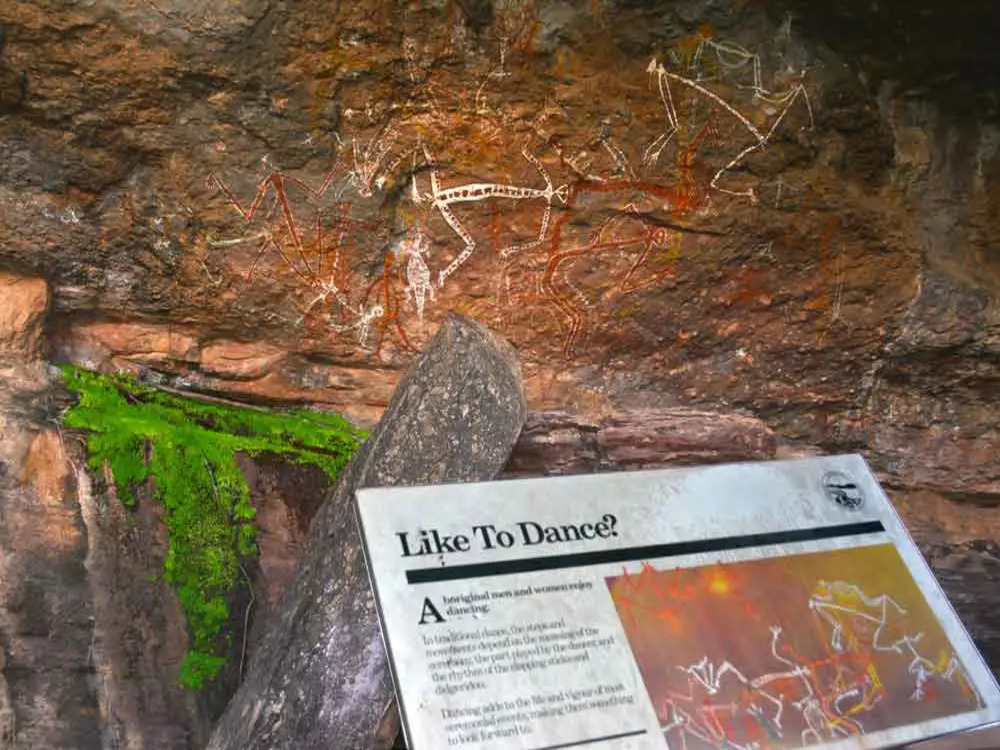
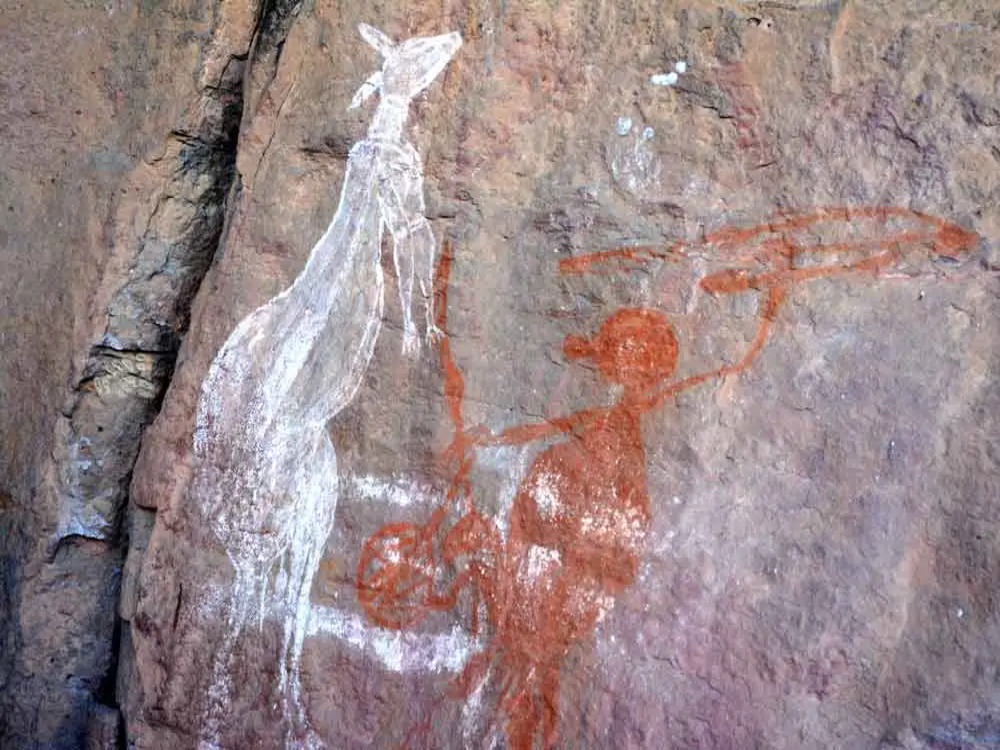
Nourlangie Rock is home to the famous Anbangbang Gallery.
Here, the rock walls hold paintings created over many thousands of years. Each image is part of a story that connects people, seasons, animals, and Country.
You may see:
Creation beings and ancestral spirits
Kangaroos, fish, and crocodiles
Scenes of hunting and daily life
Images showing early contact with Europeans
These artworks are not frozen in time.
They belong to a living culture that continues today.
Visiting with care
Nourlangie Rock is not just something to look at.
It is living Country.
When you visit Burrunguy, you are stepping into a place that still holds meaning for the people connected to it. Because of this, visiting with care matters.
Please remember to:
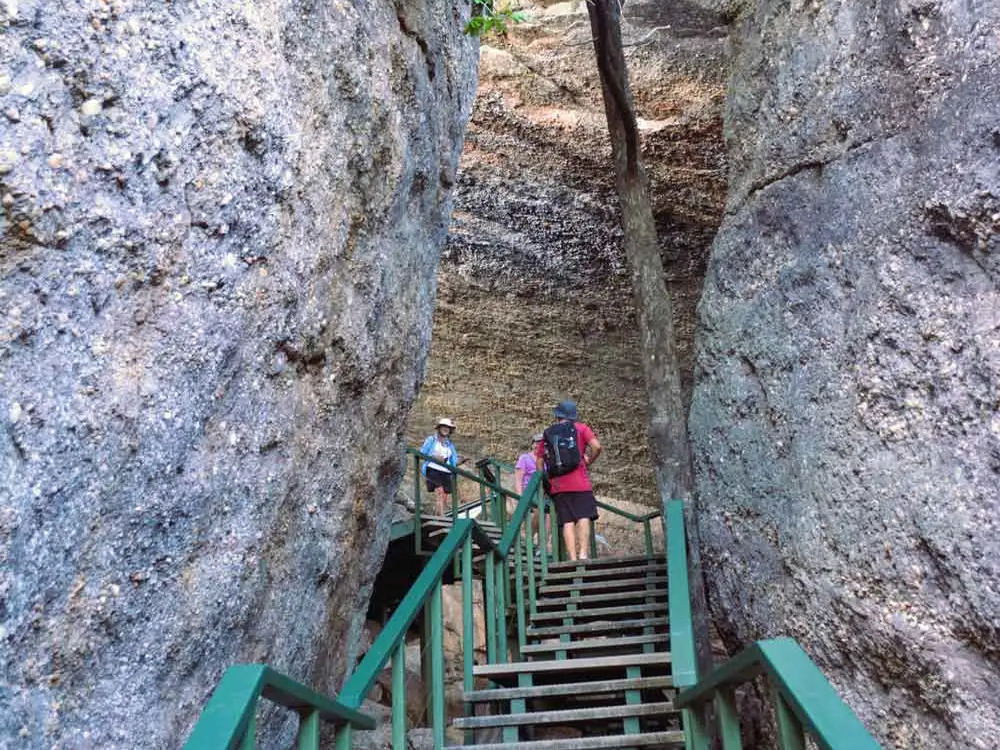
Stay on marked paths
Never touch the rock art
Follow all signs and closures
Move slowly and quietly
Take photos only where permitted
Respect helps ensure Nourlangie Rock remains protected for future generations.
Walks, views, and quiet moments
There are several short walks around Nourlangie Rock.
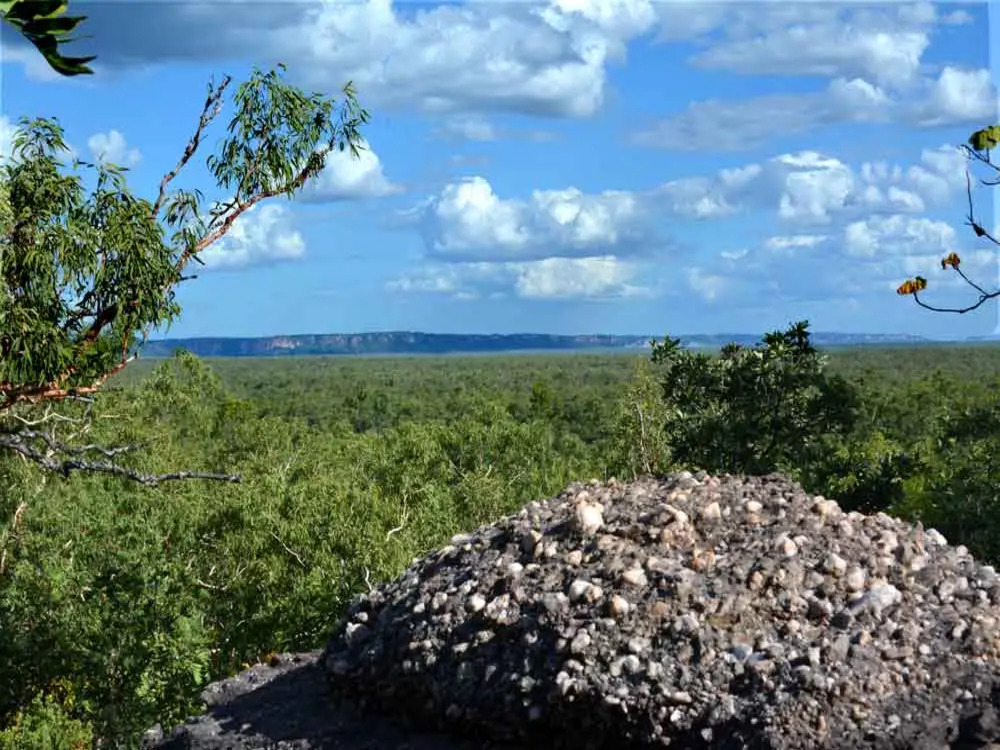
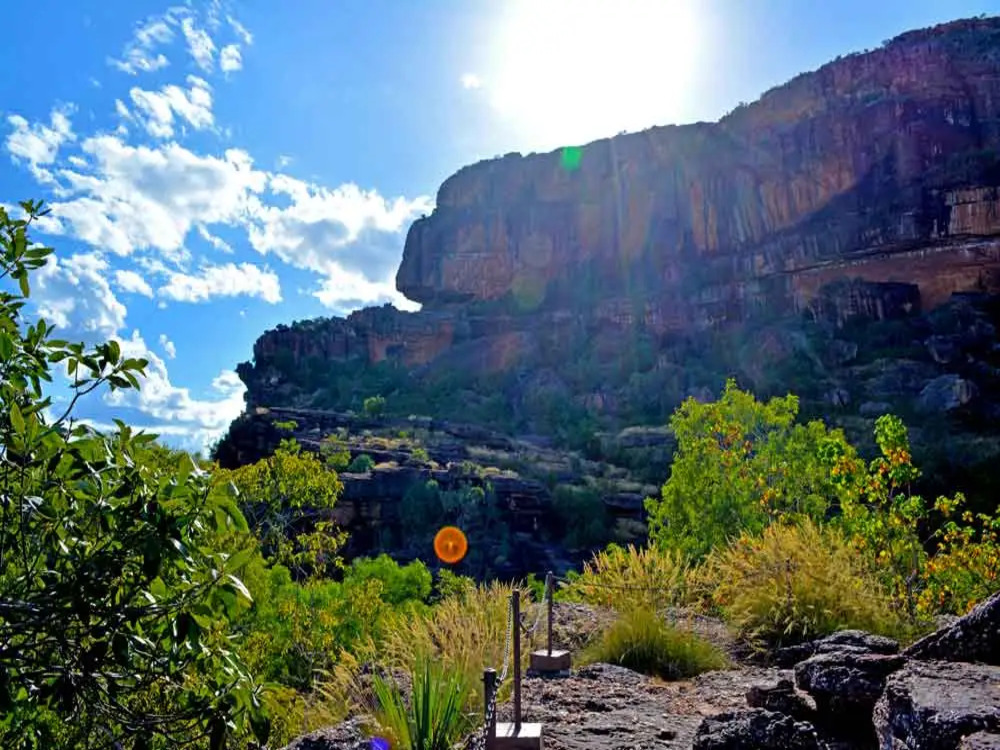
These include the Anbangbang Gallery walk, shaded rock shelter paths, and a lookout walk with wide views across Kakadu.
The lookout is especially beautiful in the late afternoon. As the light softens, the floodplains stretch out below, and the land seems to slow its breathing.
Bring water. Wear a hat.
Give yourself time to simply stand and look.
Experiencing Nourlangie Rock with ethical adventures
At ethical adventures, we believe places like this should never be rushed.
When we visit Burrunguy, we travel in small groups and take time to understand what we are seeing.
On our tours, you will:
Learn why this place has more than one name
Hear the stories behind the rock art
Understand how seasons shape life in Kakadu
Travel in a way that respects land and culture
Ethical tourism is not about doing more.
It is about doing less, more thoughtfully.
Frequently asked questions about Nourlangie Rock
Is Nourlangie Rock the same as Burrunguy?
Yes. Burrunguy is the traditional name for Nourlangie Rock.
Is Nourlangie Rock a sacred place?
Yes. It holds ongoing cultural and spiritual importance.
Can I visit Nourlangie Rock without a guide?
Yes. However, visiting with a knowledgeable guide can deepen your understanding and connection.
Why Nourlangie Rock stays with people
Some places impress you.
Others gently change the way you move through the world.
Nourlangie Rock is a place that asks you to slow down, pay attention, and walk with care. If you let it, Burrunguy will share its stories with you.
That is the kind of travel we believe in at ethical adventures.