
Kakadu National Park
A World Heritage National Park
Our Guide to Kakadu National Park
Jump To Section
Introduction:
Where is Kakadu National Park ?
Kakadu National Park is located in the Northern Territory of Australia. It is situated about 171 km southeast of Darwin, the capital city of the Northern Territory. The park covers an area of approximately 19,804 square kilometers (7,646 square miles) and is known for its diverse ecosystems, including wetlands, rivers, and rugged escarpments.
The park is a large and diverse area, and providing a single set of coordinates doesn’t capture the entirety of the park. However, an approximate of the coordinates for the central part of Kakadu National Park are:
Latitude: approximately 13.0372° S
Longitude: approximately 132.5522° E
Driving to Kakadu takes about 3 hours from Darwin.
Who goes to Kakadu ?
In 2018 Kakadu had 200,577 visitors in total which was the highest number in decades.
Our Guide to Kakadu National Park
Jump To Section
Introduction:
Where is kakadu National Park ?
Kakadu National Park is located in the Northern Territory of Australia. It is situated about 171 km southeast of Darwin, the capital city of the Northern Territory. The park covers an area of approximately 19,804 square kilometers (7,646 square miles) and is known for its diverse ecosystems, including wetlands, rivers, and rugged escarpments.
The park is a large and diverse area, and providing a single set of coordinates doesn’t capture the entirety of the park. However, an approximate of the coordinates for the central part of Kakadu National Park are:
Latitude: approximately 13.0372° S
Longitude: approximately 132.5522° E
Driving to Kakadu takes about 3 hours.
Who goes to Kakadu ?
In 2018 Kakadu had 200,577 visitors in total which was the highest number in decades.
History, Culture:
Kakadu National Park, an iconic UNESCO World Heritage Site situated in Australia’s Northern Territory, boasts a historical tapestry that weaves together the ancient stories of the Bininj/Mungguy people and the unfolding chapters of environmental conservation.
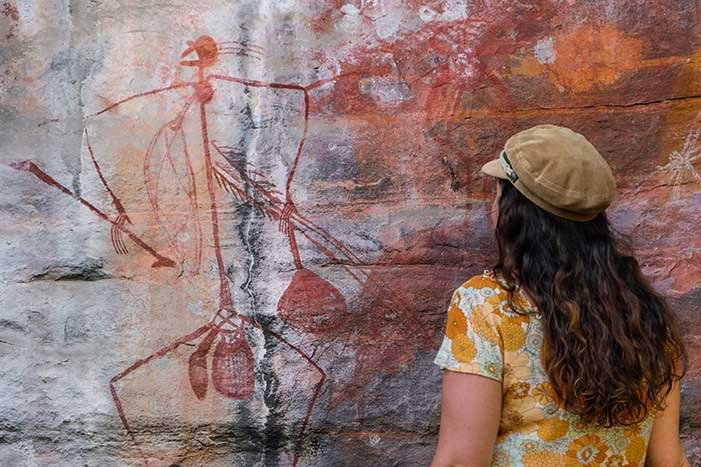
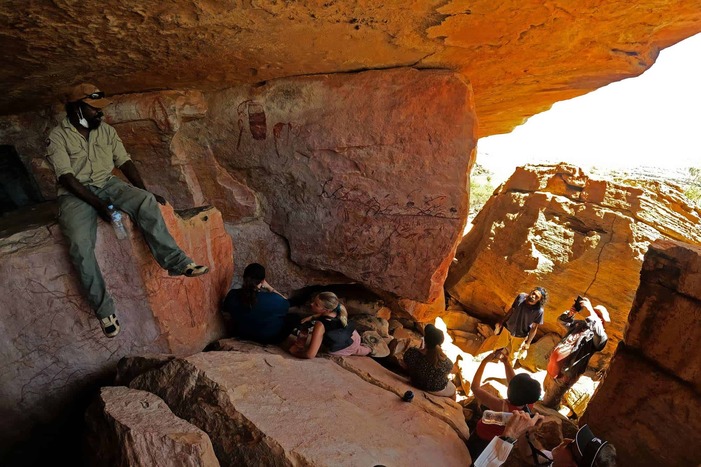
The park’s roots extend deep into the past, with the Indigenous Bininj/Mungguy people fostering an enduring connection with their ancestral lands for thousands of years. Kakadu’s remarkable rock art galleries, some dating back 20,000 years, serve as poignant canvases illustrating the spiritual and daily lives of the Indigenous inhabitants. This cultural treasure trove positions Kakadu as one of the world’s most significant rock art sites, offering a glimpse into a rich and continuous heritage.
While European explorers briefly touched this remote region during the colonial era, it was only in the mid-20th century that Kakadu garnered recognition for its unique ecological and cultural significance. In 1979, the Australian Government designated Kakadu as a national park, a pivotal step in the preservation of its natural beauty and Indigenous cultural heritage. The move aimed to protect not just a piece of land, but a living legacy shaped by millennia.
The international spotlight turned toward Kakadu in 1981 when it earned UNESCO World Heritage status. This acknowledgment underscored the park’s dual significance as a haven for diverse ecosystems and a repository of an ancient and unbroken cultural heritage. Kakadu stands as a testament to the harmonious coexistence of nature and culture, a narrative that transcends borders and resonates globally.
Environmental conservation has been a recurring theme in Kakadu’s history. The park’s vast expanse encompasses lush wetlands, rugged escarpments and diverse wildlife, including migratory birds and crocodiles. Ongoing efforts prioritise maintaining the delicate balance between preserving the natural environment and upholding the cultural traditions of the Bininj/Mungguy people.
Kakadu National Park’s history is an enthralling chronicle that unfolds through the ages, blending Indigenous wisdom, environmental stewardship, and international recognition. As visitors traverse its landscapes, they embark on a journey through time, discovering a living history shaped by the profound interplay of nature and culture. Kakadu stands as a beacon, inviting the world to appreciate the beauty of its past while forging a path toward a sustainable future.
The Kakadu Region in Australia is home to the Aboriginal people, specifically the Bininj/Mungguy people. The Aboriginal heritage of the Kakadu Region is rich and diverse, with a history that spans thousands of years. The Bininj/Mungguy people have a deep connection to the land and their cultural practices, traditions, and Dreamtime stories are intricately tied to the landscape of Kakadu.
Key aspects of the Aboriginal heritage of the Kakadu Region include:
Dreamtime Stories: The Dreamtime, also known as the Dreaming or Tjukurpa, is a central concept in Aboriginal culture. Dreamtime stories are narratives that explain the creation of the land, animals, and people. These stories are passed down through generations and are an integral part of the cultural identity of the Bininj/Mungguy people.
Rock Art: Kakadu is renowned for its rock art, which is some of the oldest and most well-preserved in the world. The rock art sites in Kakadu depict scenes from daily life, Dreamtime stories, and spiritual beliefs. The art provides a tangible connection to the ancient history and cultural practices of the Aboriginal people in the region.
Ceremonial Sites: The Kakadu Region contains various ceremonial sites that hold significant cultural and spiritual importance for the Bininj/Mungguy people. These sites are used for various ceremonies, dances, and rituals that are an essential part of maintaining cultural practices and passing on traditional knowledge.
Connection to Country: The Bininj/Mungguy people have a profound connection to their traditional lands. The Kakadu Region’s diverse ecosystems, including wetlands, savannas, and sandstone escarpments, are not only a source of sustenance but also play a crucial role in the spiritual and cultural identity of the Aboriginal people.
Sustainable Land Management: Traditional Aboriginal land management practices, such as fire management, have been crucial in maintaining the health of the Kakadu landscape. The Bininj/Mungguy people have a deep understanding of the ecological balance and have passed down sustainable land management practices through generations.
In 1981, Kakadu National Park was established, and in 1987 it was listed as a UNESCO World Heritage site, recognising both its natural and cultural values. The management of the park involves collaboration between the traditional owners and government authorities to ensure the preservation of its unique cultural and environmental heritage.
The Kakadu region, boasts a rich and diverse settlement history that spans thousands of years. This vast landscape, now renowned for it’s stunning national park, has been home to Indigenous peoples for over 50,000 years.
The Aboriginal people of the Kakadu Park region are the Bininj/Mungguy, and their connection to the land is deeply embedded in their cultural and spiritual practices. The archaeological evidence suggests continuous habitation of this area, with rock art sites providing a visual record of their ancient traditions. These artworks, found throughout the Kakadu National Park, depict scenes from daily life, spiritual beliefs, and interactions with the unique flora and fauna of the region.
European exploration and settlement began in the 19th century, with the arrival of buffalo hunters, miners, and pastoralists. The establishment of the telegraph line in the late 1800s facilitated communication and further opened up the region. However, it wasn’t until the mid-20th century that Kakadu gained broader recognition with the advent of tourism and the establishment of the national park in 1979.
The traditional custodians, the Bininj/Mungguy, actively participated in the formation of Kakadu national park, ensuring the preservation of their cultural heritage. The park’s dual World Heritage listing, recognising both its natural and cultural significance, highlights the importance of this unique landscape.
In recent decades, the Kakadu region has faced challenges such as environmental changes, including those associated with climate change, as well as the impact of invasive species. The ongoing collaboration between Indigenous communities, conservationists, and government agencies aims to address these challenges while preserving the delicate balance between environmental conservation and sustainable land use.
The settlement history of the Kakadu region is a testament to the enduring connection of the Bininj/Mungguy people to their ancestral lands. From ancient rock art to modern conservation efforts, Kakadu remains a place where the past and present coalesce, creating a landscape of immense cultural and ecological significance.
Key Features of Kakadu:
Kakadu National Park, a gem in Australia’s Northern Territory, is a stunning testament to the harmonious blend of natural wonders and cultural heritage. Its key features present an awe-inspiring journey for visitors seeking a unique and enriching experience.
Kakadu is home to one of the world’s most significant collections of Aboriginal rock art. With galleries dating back thousands of years, the park’s ancient canvases narrate the spiritual and everyday stories of the Bininj/Mungguy people. The rock art provides a mesmerizing glimpse into the rich cultural tapestry that has woven through time. Great sites to visit include Ubirr, Nourlangie, Nangullawurr
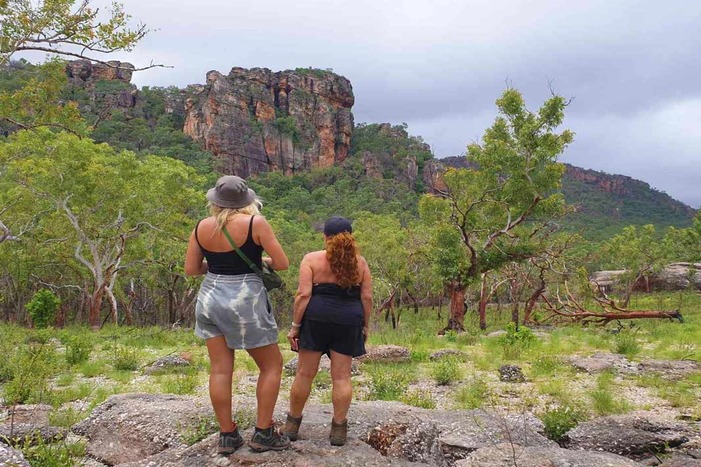
Encompassing over 19,800 square kilometers, Kakadu is a mosaic of ecosystems ranging from lush wetlands and meandering rivers to rugged escarpments and woodlands. This diversity supports a wealth of flora and fauna, including rare and endemic species. The park is a haven for birdwatchers, housing numerous migratory species.
Kakadu National Park, an expansive wilderness in Australia’s Northern Territory, emerges as a biodiversity hotspot, boasting an impressive catalogue of life across its diverse landscapes. Spanning nearly 20,000 square kilometers, Kakadu is home to a staggering array of over:
- 2,000 plant species.
- 280 bird species have been recorded in Kakadu. This includes a wide variety of waterbirds, raptors, songbirds, parrots, and other avian species.
- around 60 species of mammals. This includes iconic species such as kangaroos, wallabies, bats, and the saltwater crocodile.
- approximately 100 species of reptiles. This includes a variety of lizards, snakes, turtles and crocodiles.
- Over 10,000 insect species.
Beyond the rock art, Kakadu is studded with cultural heritage sites, including ancient burial grounds and ceremonial sites. Visitors have the opportunity to engage with the living culture of the Bininj/Mungguy people, gaining insights into their traditions and connection to the land.
The park’s landscapes are a photographer’s dream, with sweeping views from rugged escarpments, serene billabongs, and cascading waterfalls. Each vista tells a story of geological processes that have shaped the region over millions of years.
A highlight of Kakadu, the Yellow Water Billabong offers enchanting cruises where visitors can witness the vibrant birdlife, prehistoric crocodiles, and the ever-changing hues of the water at sunrise and sunset.
Kakadu National Park’s global significance is underscored by its UNESCO World Heritage status, acknowledging its outstanding universal value as both a natural and cultural landscape.
Getting There:
Self Drive to Kakadu Park
There are many great attractions in Kakadu which are available all year round. There are also many which require a 4WD vehicle and are open seasonally. Distances in the park are massive also which make self driving a fun albeit involved process.
Whether it be a hire car or your own vehicle, there are many benefits to self-driving to Kakadu National Park However, with any self-drive trip there are many things to consider such as itinerary, safety, food and water supplies, travel conditions, accommodation options etc.
Read our guide on Self Drive in NT.
Ride a bike to Kakadu
The closest establishment in Kakadu (Jabiru) is 260 km away from Darwin. Along the way there are 2 roadhouses about half way there which have refreshment and accommodation options. The road is in good condition but be aware that the roads both in the park and accessing the park (highway) do not have much in the way of shoulder verges so traffic is a constant concern.
Saying that, a bike is a very eco-friendly option and one that will justify many beverages at the end of the day (for those that need justification). To do this you will need multiple days and a good plan if things go wrong. Certainly every year there are a handful of people that do this.
Fly to Kakadu
That’s right, Helicopter & fixed wing flights can be arranged to land in Kakadu. The best operator for this is Kakadu Air. This company also does day tour flights from Darwin.
Kakadu tour companies
For those who are looking to understand and fully appreciate Kakadu and the region then a quality guided tour is most often the best option. There is a broad range of professional businesses and individuals offering public group and private tours to Litchfield Park. These vary from budget through to premium and personal to the opposite of personal.
Group size is such an important aspect when choosing an organised tour. Be sure to give it consideration before settling on a company.
When it comes to cost, size does matter. Premium tours typically have long term experienced guides (5 years or more) with formal (University) qualifications. They will also limit the group size to 10 or less to enhance the day trip experience. You should also be looking forward to the menu items on the premium tour with home-prepared items being the standout. You will pay for this however if you only do it once, do it right.
Things to Do:
Kakadu Waterfalls
Kakadu National Park, located in the Northern Territory of Australia, is known for its stunning waterfalls. Some of the best Kakadu waterfalls include:
Jim Jim Falls
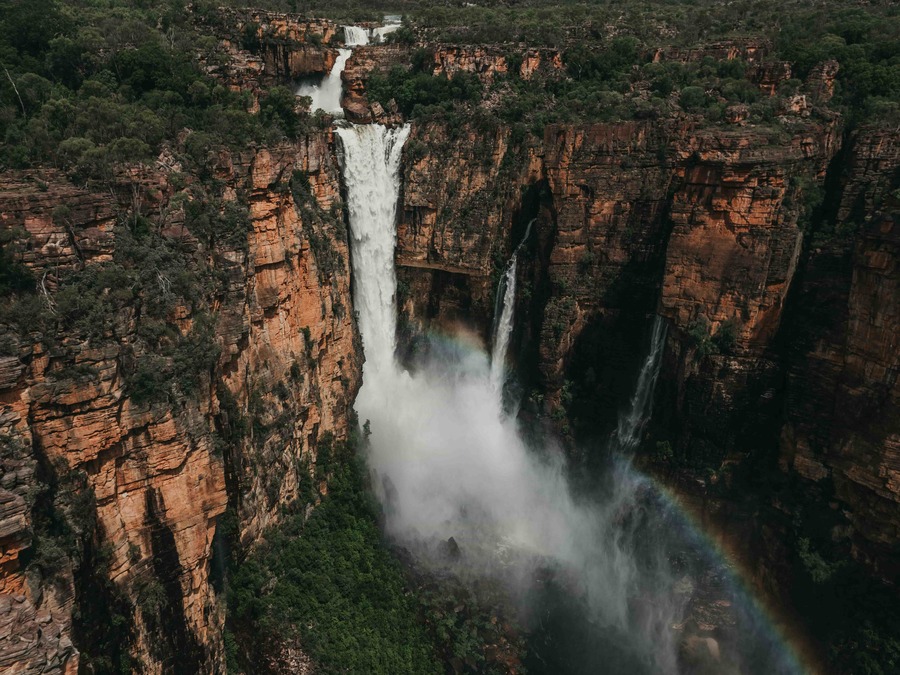
One of the most iconic waterfalls in Kakadu, Jim Jim Falls is a breathtaking sight. The falls cascade over the Arnhem Land escarpment during the wet season, creating a spectacular plunge pool at the base. Access to Jim Jim Falls can be challenging, especially during the wet season when the road may be closed.
Twin Falls
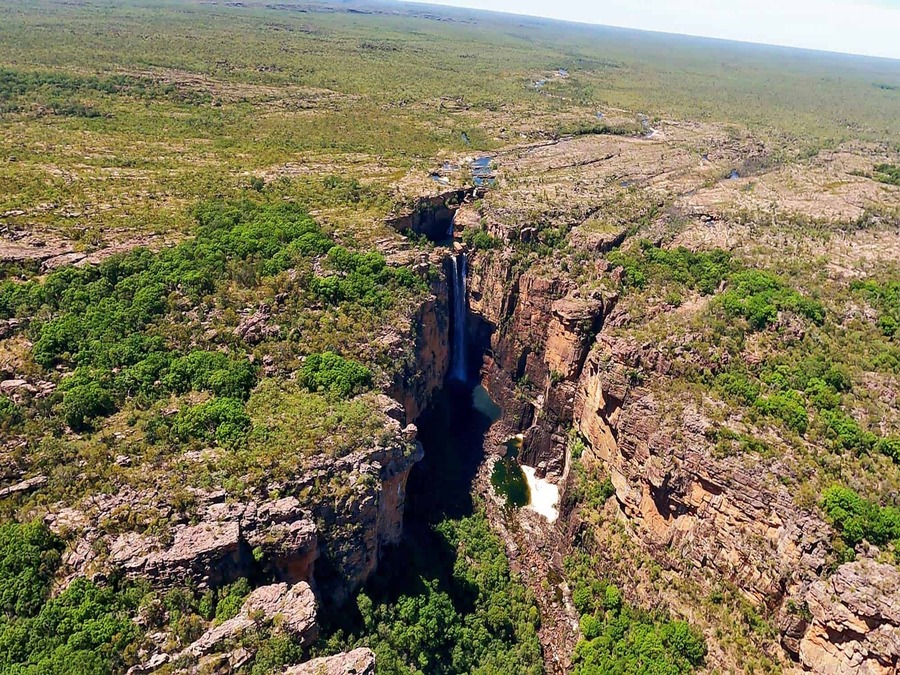
Another impressive waterfall in Kakadu, Twin Falls is known for its two parallel falls that flow over the escarpment. To reach Twin Falls, visitors can take a boat shuttle along the gorge or hike through the escarpment (when open). Like Jim Jim Falls, access may be restricted during the wet season.
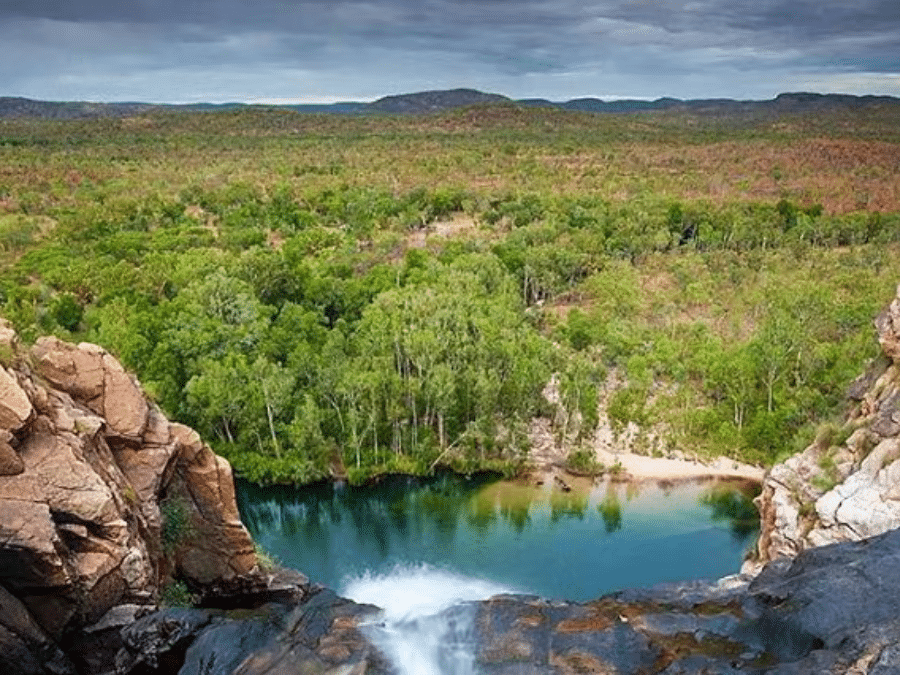
Gunlom Falls
Also known as the Waterfall Creek, Gunlom Falls offers a unique experience as it features both a plunge pool at the top and a series of natural infinity pools with panoramic views of the southern part of Kakadu. The hike to the top is rewarded with a refreshing swim and stunning scenery.
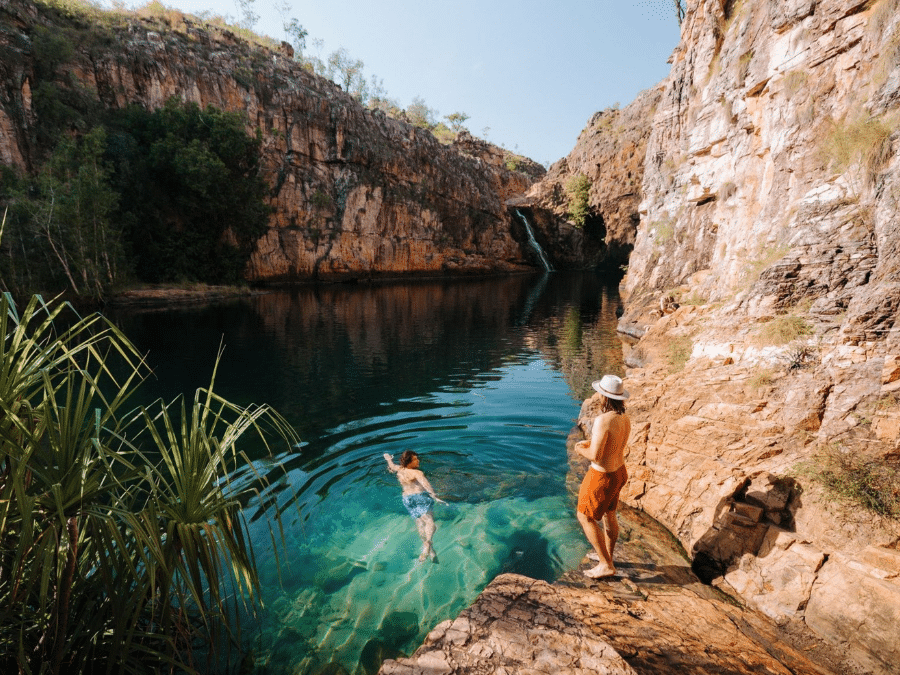
Maguk (Barramundi Gorge)
Maguk is famous for its clear plunge pool surrounded by high sandstone cliffs. The 1-kilometre walk to the gorge takes visitors through monsoon forest and is rewarded with a pristine swimming spot. Maguk is usually accessible year-round.
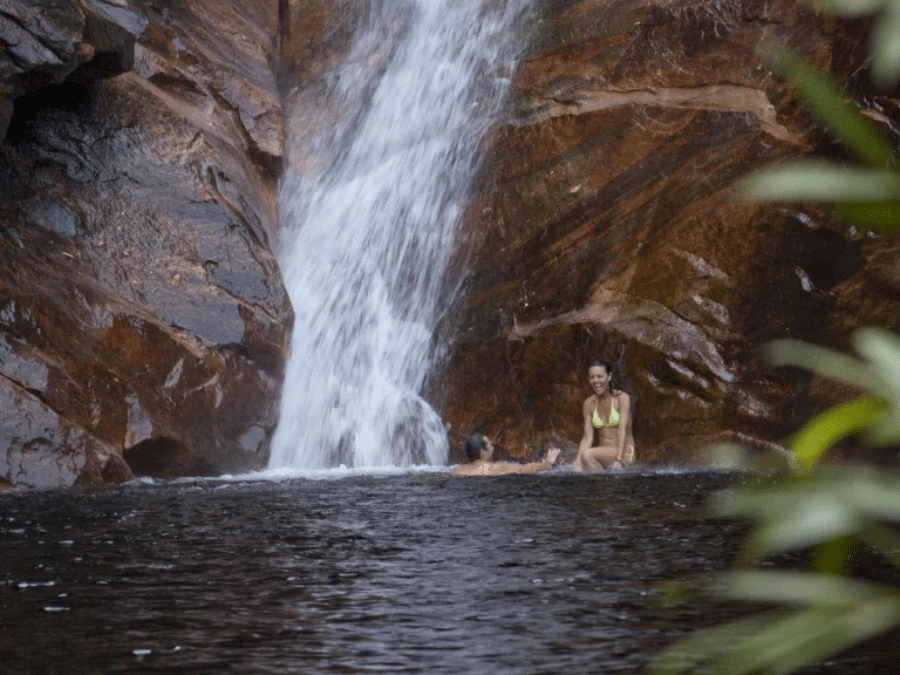
Motor Car Falls
This waterfall is located in the southern part of Kakadu and offers a more secluded experience. The falls flow over a series of rock terraces, creating a tranquil setting. The access road may be challenging, especially during the wet season.
Before planning a visit to Kakadu National Park, it’s essential to check the seasonal conditions and road accessibility, as some areas may be closed during the wet season (November to April). Always follow safety guidelines, pay attention to signage, and check with local authorities for the latest information on road and trail conditions.
Kakadu National Park, offers a unique and unforgettable camping experience amidst breathtaking natural beauty. The camping spots within Kakadu are diverse, catering to a range of preferences from those seeking a rugged outback adventure to those desiring a more comfortable stay.
One standout feature of Kakadu’s camping spots is the sheer variety of landscapes they offer. Whether nestled beside serene billabongs, perched atop rocky escarpments, or surrounded by lush rainforests, each camping location provides a distinct and immersive encounter with the park’s diverse ecosystems. This diversity is reflected in the rich array of flora and fauna that campers can observe right from their tents.
For the adventurous camper, Kakadu’s more remote sites beckon with the promise of true wilderness exploration. These sites, often accessible only by four-wheel drive, allow visitors to disconnect from the modern world and reconnect with nature. The sense of solitude and the opportunity to witness the star-studded outback sky create a truly magical experience for those willing to venture off the beaten path.
On the other hand, for those seeking a more accessible and family-friendly camping experience, Kakadu has several well-equipped campgrounds with facilities ranging from basic amenities to more comprehensive services. These campgrounds offer a comfortable base for exploring the park’s iconic landmarks, such as Ubirr and Nourlangie, while still providing a sense of immersion in nature.
While the camping experience in Kakadu is undoubtedly awe-inspiring, it is essential for visitors to be well-prepared. The region’s extreme weather conditions, including high temperatures and occasional heavy rainfall, require campers to plan accordingly. Adequate supplies, reliable equipment, and a keen awareness of safety guidelines are crucial for a positive camping experience in this unique and challenging environment.
Kakadu National Park’s camping spots offer a remarkable blend of natural beauty, adventure, and diversity. Whether you’re a seasoned camper yearning for a rugged escapade or a family seeking a more comfortable retreat, Kakadu has a camping spot that will leave you with enduring memories of Australia’s untamed wilderness.
- Cooinda Campground: Situated near the Cooinda Visitor Center, this campground provides a range of accommodation options and facilities including powered and unpowered sites, amenities, and a swimming pool. Cooinda is known for its proximity to Yellow Water Billabong, a popular wildlife-spotting location.
- Merl Campground: Located in the southern part of Kakadu, Merl Campground offers a more remote camping experience where by facilities are basic, and visitors should be prepared for a more rugged camping environment.
- Gunlom Campground: Positioned near the stunning Gunlom Falls, this campground offers a picturesque setting with basic facilities. Camping is available during the dry season.
- Mardugal Campground: Close to the Nourlangie Rock art site, Mardugal Campground provides both powered and unpowered sites. Facilities include amenities, and it is a good base for exploring the rock art and escarpments in the area.
- Maguk Campground: This campground is near the Maguk plunge pool and waterfall and has basic facilities for camping. Camping is available during the dry season.
There are several hiking trails within the park that allow visitors to explore its diverse ecosystems. Here are only some of the more notable hikes in Kakadu:
- Nourlangie Rock Art Site and Anbangbang Billabong Walk: This is a relatively easy walk that takes you to the Nourlangie Rock Art Site, where you can view ancient Aboriginal rock art. The trail also passes by the Anbangbang Billabong, providing opportunities for bird watching.
- Barramundi Gorge (Maguk) Walk: This trail leads to the Barramundi Gorge, also known as Maguk. The walk takes you through monsoon forests and eventually to a pristine waterfall and plunge pool where you can swim.
- Jim Jim Falls Walk: This challenging hike takes you to the base of the iconic Jim Jim Falls. The trail involves walking over rocks and uneven terrain. The falls are most impressive during the wet season.
- Gunlom Plunge Pool Walk: Gunlom is famous for its panoramic views of the southern part of Kakadu. The walk takes you to a natural infinity pool at the top, where you can enjoy a refreshing swim and take in the scenery.
- Yurmikmik Walks (Motor Car Falls, Boulder Creek, and Kurrundie Creek):
- Yurmikmik offers several interconnected walks of varying lengths and difficulty levels. Motor Car Falls is a highlight, with a waterfall and swimming hole.
- Bubba Walk: This short walk near the Bowali Visitor Centre introduces visitors to the diverse flora and fauna of Kakadu. It’s a great option for those looking for an easy stroll.
- Kakadu Escarpment Walk: This challenging hike provides panoramic views of the Arnhem Land escarpment and takes you through diverse landscapes, including woodlands and rocky outcrops.
Before embarking on any hike in Kakadu, it’s essential to check with the park authorities for the latest information on trail conditions, weather, and any necessary permits. The climate in Kakadu can be extreme, so it’s crucial to be prepared with sufficient water, appropriate clothing, and other necessary supplies.
Kakadu National Park, nestled in the heart of Australia’s Northern Territory, is a haven for biodiversity, boasting an array of ecosystems, including wetlands and rivers that are home to two distinct species of crocodiles—saltwater and freshwater. This World Heritage-listed site offers a unique opportunity for nature enthusiasts to witness the fascinating lives of these ancient reptiles.
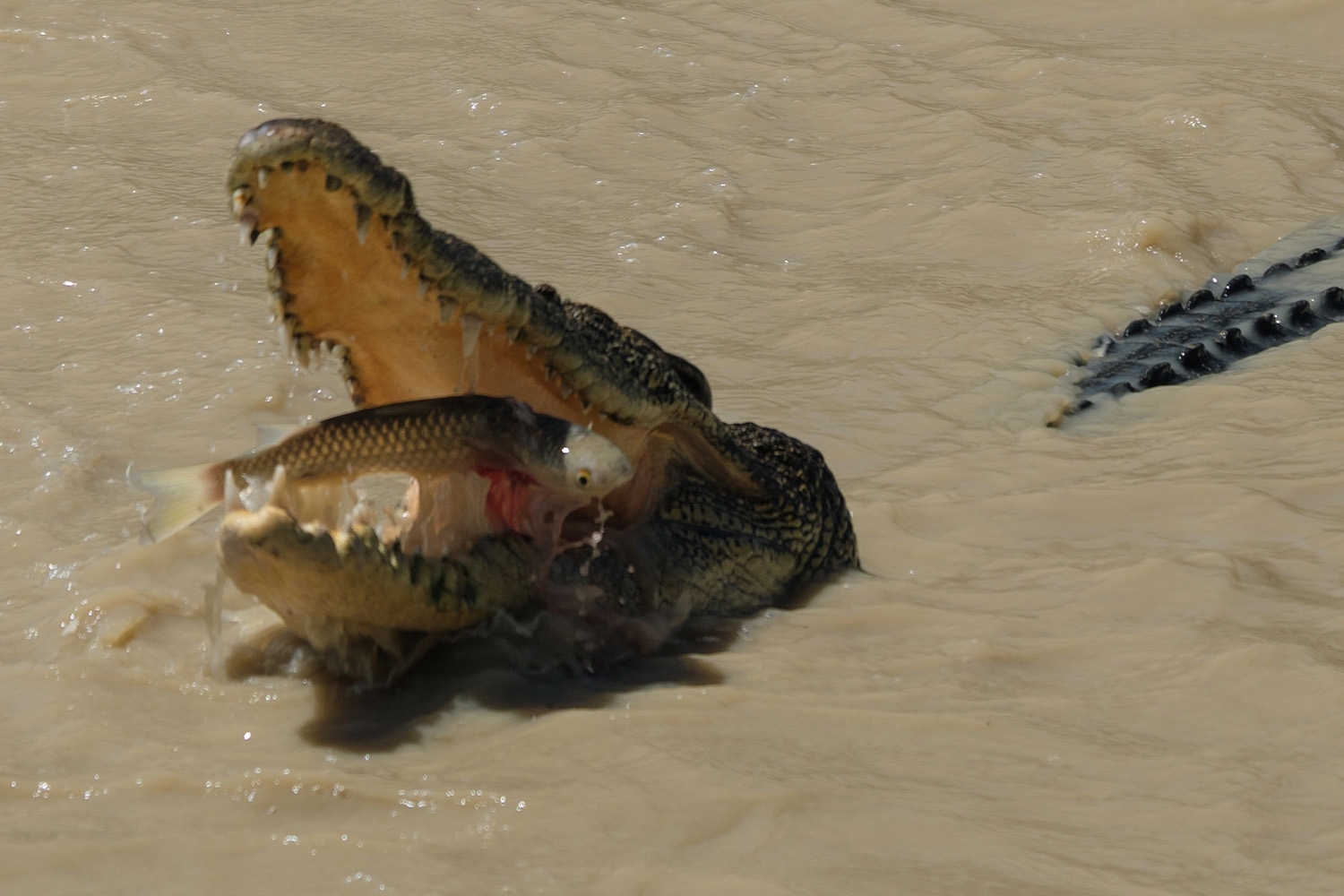
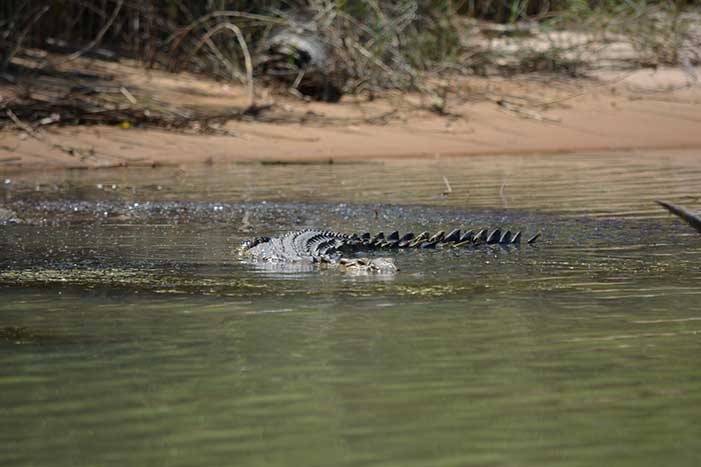
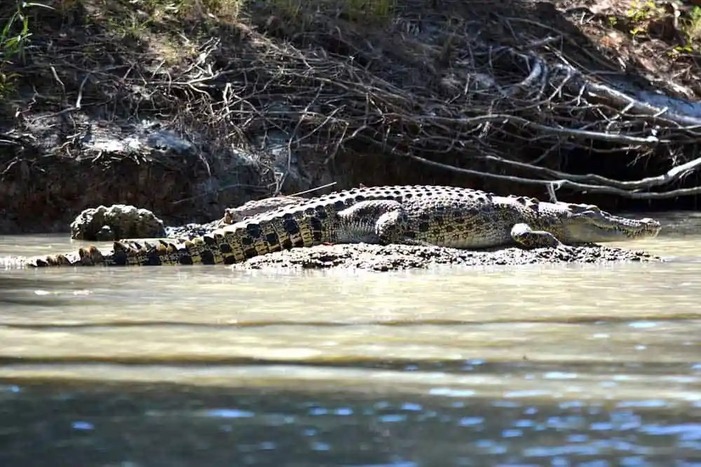
The East Alligator River, a prominent waterway coursing through Kakadu, provides a habitat for the formidable saltwater crocodile. Boat tours and designated viewing platforms along the riverbanks offer visitors a front-row seat to observe these apex predators in their natural environment. The sheer size and primal presence of saltwater crocodiles make for a thrilling and educational experience, providing insights into their behavior and the conservation efforts in place to protect them.
In addition to saltwater crocodiles, Kakadu is also home to the freshwater crocodile, a smaller and less aggressive species found in the park’s freshwater habitats, such as billabongs and creeks. Yellow Water Billabong, among other wetlands, serves as a vital refuge for these freshwater crocodiles. Guided tours and informative experiences allow visitors to appreciate the diversity of crocodilian life within the park, gaining a comprehensive understanding of both saltwater and freshwater species.
Kakadu’s commitment to conservation is evident in its careful management of wildlife and visitor safety. The coexistence of humans and crocodiles showcases the delicate balance of nature. Witnessing both saltwater and freshwater crocodiles in Kakadu National Park not only provides an adrenaline-pumping adventure but also fosters a deep appreciation for the resilience and beauty of these remarkable creatures in their untamed habitat.
Best Time to Visit Kakadu National Park ?
The best time to visit Kakadu National Park in the Northern Territory of Australia depends on your preferences and the type of experience you’re seeking. Kakadu has distinct wet and dry seasons, each offering unique advantages:
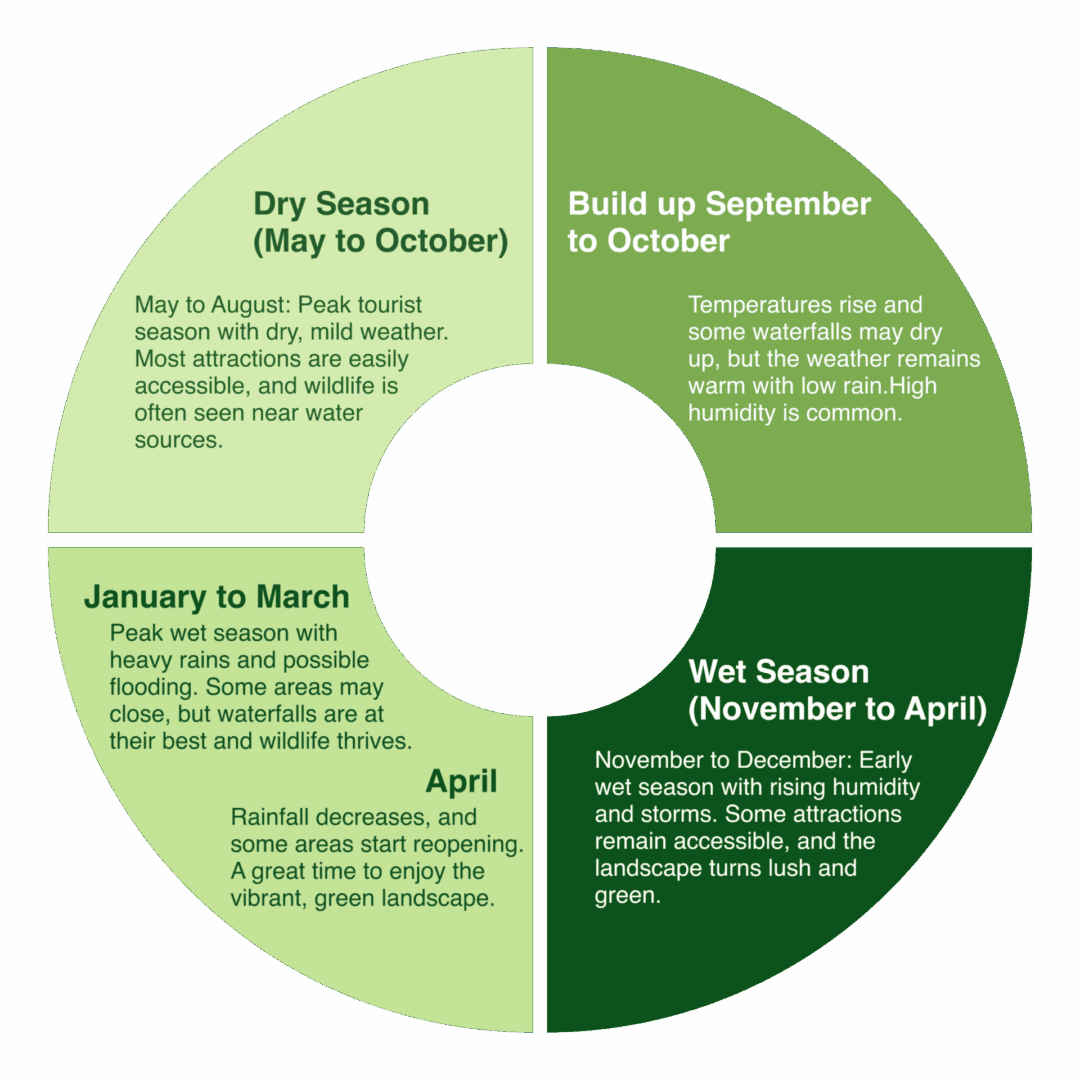
Dry Season (May to October)
May to August: This is generally considered the peak tourist season. The weather is dry and mild, with cooler temperatures compared to the wet season. During this time, many attractions are easily accessible, and there’s a lower risk of rainfall. Wildlife is also more visible as animals congregate around water sources.
Build up – September to October
Towards the end of the dry season, temperatures begin to rise, and some waterfalls may start to dry up. However, this period is still a good time to visit as the weather is warm, and the risk of rain is low. Humidity will be high.
Wet Season (November to April)
November to December: This is the early wet season, characterized by increasing humidity and occasional thunderstorms. Some attractions may still be accessible, and the landscape is lush and green.
January to March
These months experience the peak of the wet season, with heavy rainfall and the possibility of flooding. Some areas of the park may be closed, and certain attractions might be inaccessible. However, this is the time when waterfalls are at their most spectacular, and the landscape is teeming with life.
April
The late wet season sees a reduction in rainfall, and some areas of the park may reopen. It’s a transitional period, and you can still experience the lushness of the landscape.
Keep in mind that some roads and attractions may be closed during the wet season due to flooding, so it’s essential to check with park authorities for up-to-date information before planning your visit. Additionally, during the wet season, there is a higher risk of mosquitoes and other insects, so be prepared with appropriate clothing and insect repellent. Ultimately, the best time to visit Kakadu depends on your preferences for weather, wildlife viewing and the type of experiences you seek in this unique and diverse national park.
Incredible Facts About Kakadu:
IT IS NOT LOCATED IN DARWIN
Kakadu is situated in the “Top End” of Australia in the Northern Territory. Darwin is the closest City to Kakadu but it is actually 150km South-East of Darwin and would take over 1 hour 30 minutes to drive to the entrance and then another hour to the other side.
IT IS ONE OF AUSTRALIA’S LARGEST NATIONAL PARK
Kakadu National Park is almost 20,000 square kilometres (19,816) which is almost the size of Jamaica and Cyprus combined.
The National Park is split into 7 regions to make it easier to get around. Each region is unique in it’s habitats:
- Erre- East Alligator
- South Alligator river
- Jabiru
- Jim Jim – Twin Falls
- Mary River region
- Nourlangie – Burrungkuy
- Ngurrungurrudjba – Yellow Water
IT WAS ONLY ESTABLISHED AS A NATIONAL PARK IN THE 70’S
Despite being NT’s largest National Park, Kakadu only started to be established under the National Parks and Wildlife Conservation act on 5th April 1979.
THE PARK IS ONE OF FOUR AUSTRALIAN LOCATIONS LISTED AS A UNESCO WORLD HERITAGE SITE
In 1981, Kakadu National Park STAGE 1 was declared as a UNESCO world heritage site due to it’s beautiful landscape, historic cultural heritage and sacred sites.
THIS ABORIGINAL LAND IS HOME TO THE OLDEST CONTINUOUS CULTURE IN THE WORLD
Local Aboriginal people have lived in Kakadu for more than 65,000 years:
- There are over 5,000 documented art sights in the region
- The local Aboriginal population in Kakadu today is around 500
- Some Aboriginal rock art sites are nearly 20,000 years old
- In March 1978 and Aboriginal land rights claim was made
- Almost all of Kakadu is Aboriginal land and owned by the traditional owners
IT IS MANAGED BY PARTNERSHIP OF TRADITIONAL OWNERS AND PARKS AUSTRALIA
Since the Aboriginal land claim, the traditional owners lease the land to the Director of National Parks and they jointly manage the National Park. The partnership between the Bininj/Mungguy Aboriginal people and Parks Australia means skills and knowledge about the land is shared and decisions are made together.
KAKADU NATIONAL PARK IS HOME TO AN ABUNDANCE OF ANIMALS
- A tenth of all Northern Territory crocodiles live in Kakadu, the count is around 10,000
- There are at least 280 different bird species in Kakadu
- One third of all bird species in Australia live in Kakadu
- There are around 60 species of fish in Kakadu
YOU CAN FIND THE GREATEST VARIETY OF ECOSYSTEMS IN THE AUSTRALIAN CONTINENT IN KAKADU NATIONAL PARK ALONE
A biome is a large land area categorised by the vegetation, soil, climate and wildlife. In Kakadu National Park alone, you can find the largest diversity of ecosystems including savanna woodlands, floodplains, mangroves, open forests, monsoon forests, coastal areas and tidal mudflats.
- Over 2,000 different plants grow in Kakadu
- In summer, Kakadu’s grassy plains can reach over three meters high
- Cathedral termite mounds can grow up to 20 feet in height
- There are over 300 creeks and rivers in Kakadu
KAKADU’S LARGEST WATERFALL IS BIGGER THAN ALL WATERFALLS IN LITCHFIELD AND NITMILUK NATIONAL PARKS
How cool is that? Jim Jim Falls is 200 meters high and the water thunders over the drop in the wet season.
6 SEASONS ARE RECOGNISED IN KAKADU NATIONAL PARK
There are 2 main seasons in Kakadu; wet and dry season. However, 6 seasons are recognised by the traditional owners:
- Kudjewk – Monsoon season – December to March
- Bangkerreng – “Knock ’em down” storm season – April
- Yekke – Cooler but still humid season. May-mid June
- Wurrkeng – Cold weather season. Mid-June-mid August
- Kurrung – Hot dry weather season. Mid-August-mid October
- Kunemeleng – Pre monsoon storm season. Mid-October- December
KAKADU GETS ALMOST AS MANY TOURISTS AS ULURU EACH YEAR
Over 210,000 tourists visit Kakadu National Park each year and 250,000 people visit Uluru each year.
YOU CAN TOUR KAKADU NATIONAL PARK SUSTAINABLY
Visiting a magnificent land that is home to the oldest surviving civilisation, diverse ecosystems and natural habitats is an incredible experience. But, in order to keep this sacred land protected for generations to come, it is important to respect the land and leave as little mark behind as possible. How is this achievable?
Book an experienced and knowledgable eco-tour guide! ethical adventures are environmentalists at heart who work to ensure the land and culture is protected. We offer only private or small group tours so we have minimal impact on the land but maximum impact on your travel experience.
Check out our Kakadu day tour from Darwin or our awesome multi-day Kakadu tour and join the growing community of responsible and respectful tourists!